

In the previous part of this article, Yoga For Back Pain (Part-I), we were discussing the ways and postures needed to practice to get relief from back pain and related problems through yoga. In that part we covered the initial three poses of the shortlisted poses for back pain relief: (1) Sarvangasana, (2) Setu Bandhasana and (3) Matsyasana.
In this section, we’re going to explain the remaining postures of the list, ie., (4) Vatayanasana, (5) Halasana, (6) Paschimottanasana, (7) Purvottanasana, (8) Dhanurasana, (9) Chakrasana, (10) Ardha Matsyendrasana, and (11) Savasana.
The order in which it is mentioned here is in accordance with the procedures that some asanas must be performed followed by certain poses. Hence, if you follow this sequence you need not worry about that, just perform these in order.
Vatayanasana – (Horse Face Pose):
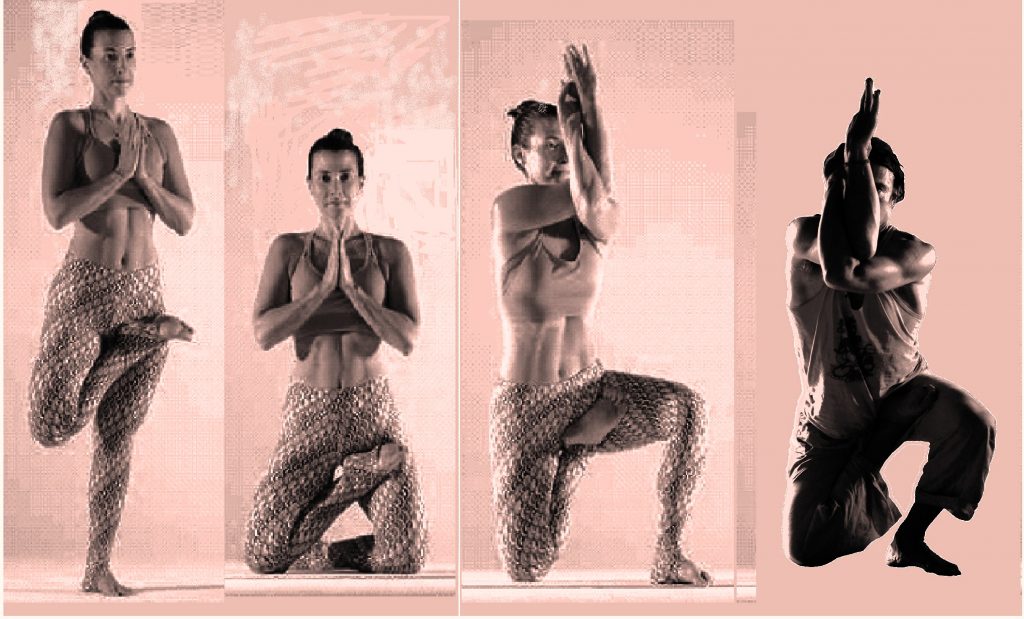
Hand gestures are like Garudasana and below hip half Padmasana, Now take a deep breath and hold it. Fold your right leg at your knee and press it against your abdomen. Make sure to keep the alternate leg straight while doing this, as shown in the picture. Now, switch legs and to conclude, if possible, use both legs at the same time. Duration around 15 seconds. Normal breathing.
Halasana – Plough Pose
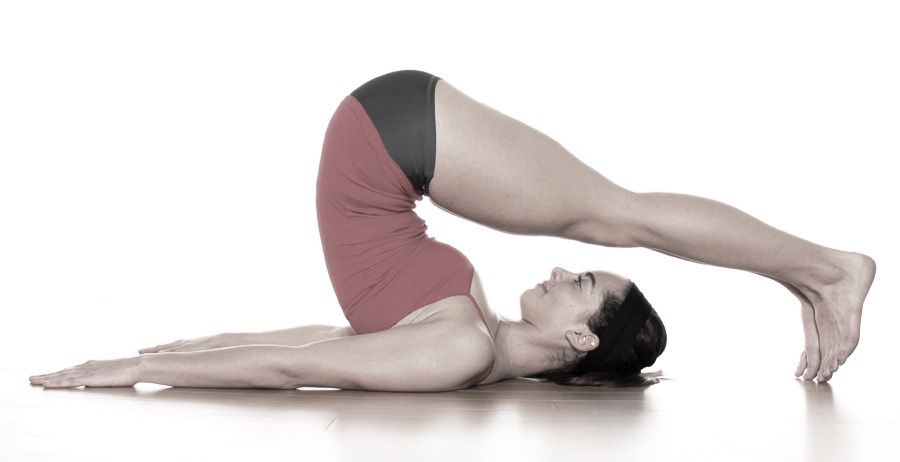
Lay down on your back keeping your hands, palms down, near the thighs. Slowly raise your hip and the lumbar part of the back ,as you inhale, like shown in the above picture (Ardha Sarvangasana) and raise legs straight to almost full Sarvangasana, then bring down the legs till your toes touch the floor or go as far as you can while exhaling. Our goal here is to get as deep stretch for the lower back as possible. Stay for a while breathing normally, say 10 – 30 breathing cycles.
While reversing the order, inhale until your leg reaches 90 degrees with the ground then exhale while lowering down from there to the original flat position. Relax in Savasana pose for a minute or so.
Paschimottanasana – Forward Bend:
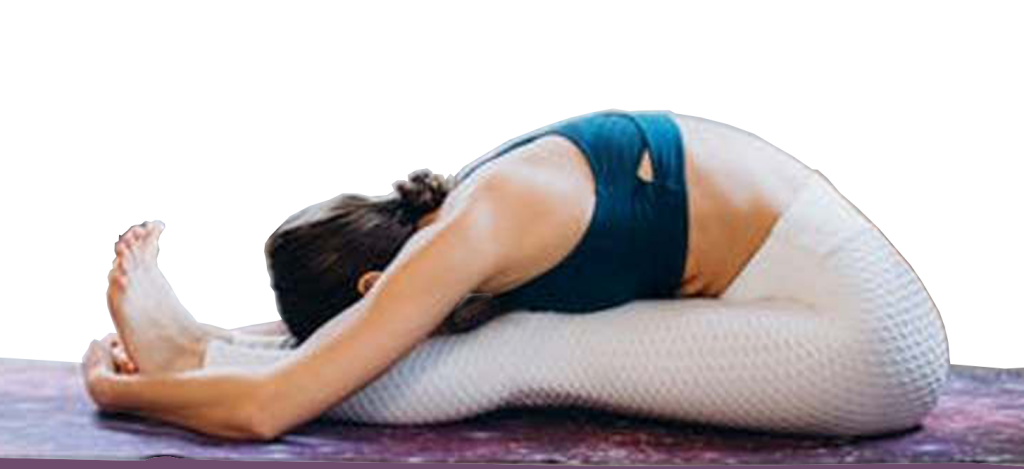
First, sit on your mat with your legs straight in front of your body as in Dandasana pose. Bring your arms straight out reaching towards the ceiling from the sides over your head. Inhale deeply to draw your spine to expand.
While coming down forward, exhale. Bring down your head as much as to touch your knees while reaching your hands to hold your each toes by corresponding hands. If you can’t reach up to hold your toes, use some strap to hold around your feet and bend as possible as you are comfortable without much strain.
Stay there for a few breathing cycles. As you inhale, start releasing back in reverse order till hands reach up. Then exhale while bringing down your hands to the original Dandasana position.
Purvottanasana – Inclined Plane Pose:
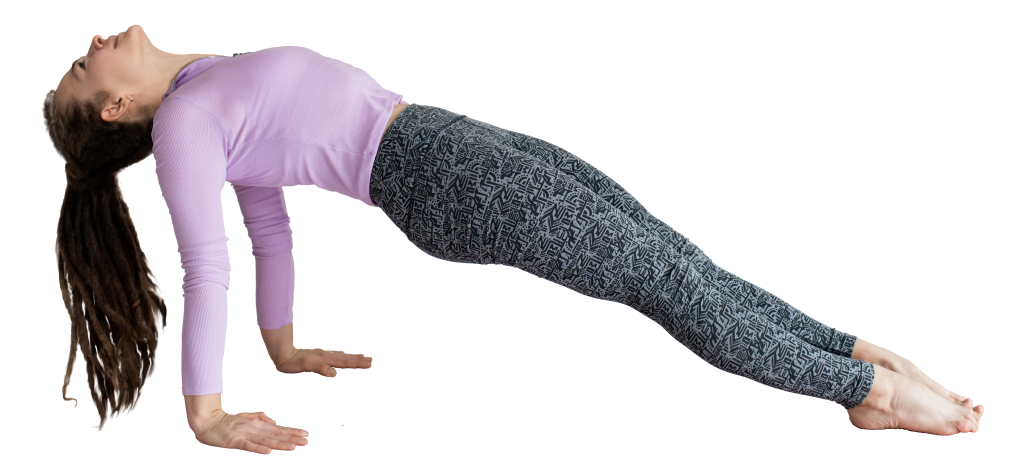
To start with, Just like in Dandasana, sit with the legs stretched forward, placing your palms on the ground by the side of your body. Move your hands about 30 cm behind the buttocks, keeping your elbows straight, pointing fingers towards the buttocks with the body slightly reclined. As you inhale, lift your body in the upward direction and raise as high as you can without any strain on the body. Hang your head loose in the backward direction.
Once you reach your maximum level, stay there for a few minutes breathing normally, balancing your whole body on the soles of your feet and arms. In this position, keep your arms perpendicular to the ground. To come back to the starting position, as you exhale, lower the body slowly raising your head along till your buttocks touch the ground. Take a long deep breath and relax. You can repeat this 2 -5 times. This is a preparatory pose for enabling us to do Chakrasana easily.
Dhanurasana – Bow Pose:

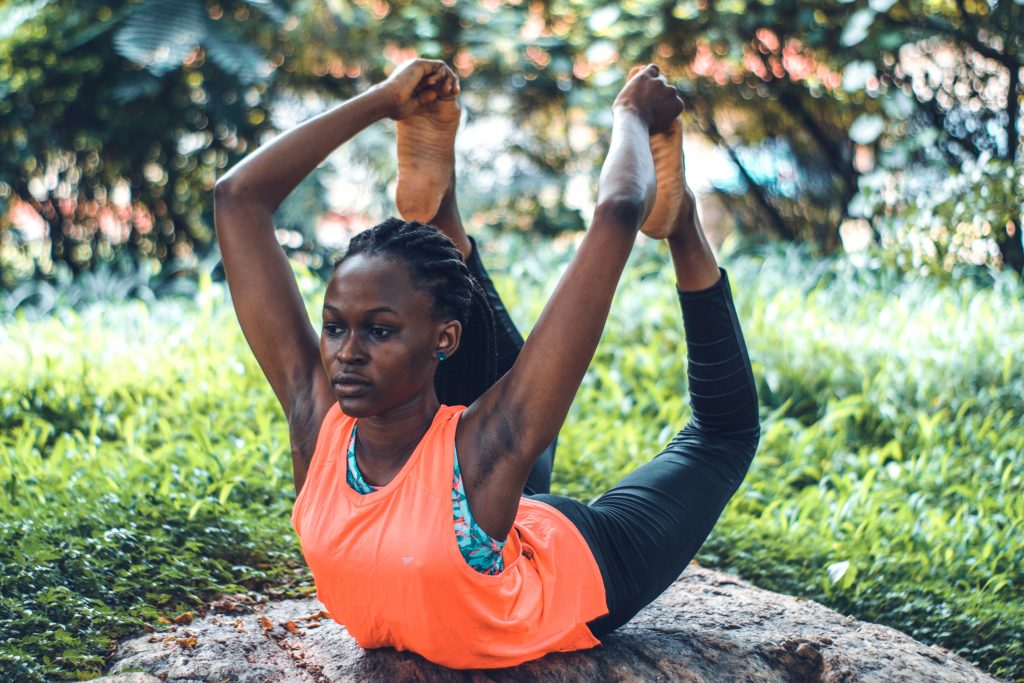
Lay flat on your belly keeping hands alongside your body with palms facing up. Bend your legs backward up, bringing your heels as near as you can to your buttocks while you exhale. From your back, reach your hands to take hold of your ankles (hold left ankle with left hand and right ankle with right hand). Keep your knees apart but not wider than the width of your hips.
Applying little more force to lift your heels away from your buttocks simultaneously while lifting thighs also above the ground. Breath continuously as usual while staying there for around 30 seconds or so. While releasing back to a flat position, exhale and stay calm for a few breaths, and then, if your stamina permits, do the whole process one or two more times.
Chakrasana – Wheel Pose:
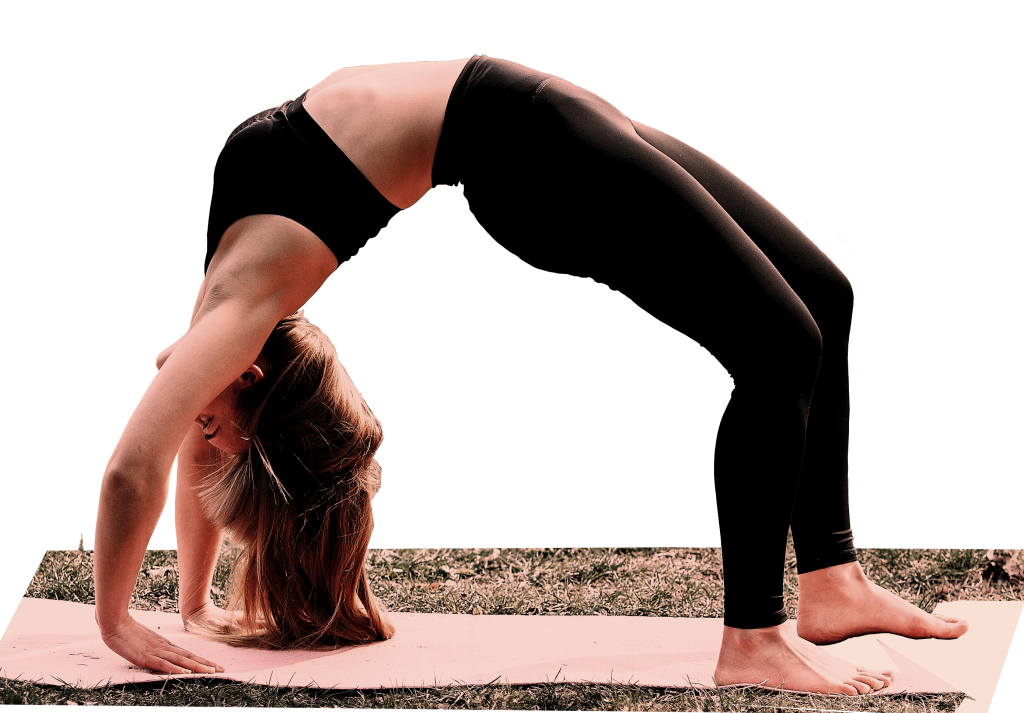
Lie down on your back in supine position. Shrink the arms and legs as preparatory steps. Start with first exhaling and then raise your body while inhaling and rest the entire body weight on the hands and feet. Keep your head tucked firmly in between your shoulders in that raised position. Stay there for 10 – 15 seconds with normal breathing. When easing down, start with inhaling first and then come to the original position while exhaling.
Benefits – Warnings:
This is a highly beneficial and powerful asana that helps not only to cop with back pain issues but also in multiple ways. You are not advised to do this pose, if you are suffering from any serious ailments related to the spinal column. Don’t force your body to stretch when your body is not so flexible.
Ardha Matsyendrasana – Spinal Twist:
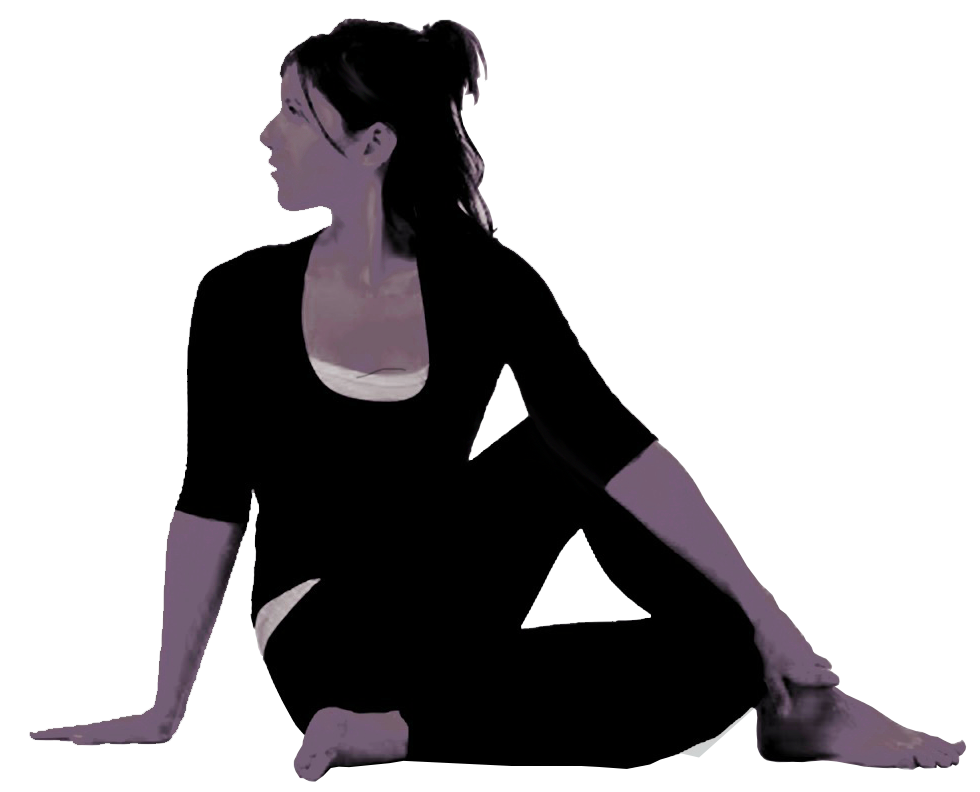
Sit straight with your legs stretched and placed together keeping your spine erect. Bend your left leg so that the heel of the left foot lies next to the right hip. Place your right leg next to the left knee taking over it. Twist your whole upper parts towards the right including head, neck and shoulders, keeping your eyes on your right shoulder in erect position. To simply put, place your right hand behind you, and the left hand on the right knee while doing this pose. Stay for a few seconds, about 30 to 60 as you breathe normally but slowly and deeply.
Release your right hand as you exhale and then the waist, chest, and finally the neck are released. Relax for a few seconds in a sitting straight position. Repeat the same steps on the other side also (replacing left with right and vice versa) and exhale when coming back to the front. Do this within your comfort level and twist as far as your body allows to do, especially if you have any pre-existing conditions.
Savasana – Corpse Pose:

This is a relaxation pose. After every stretching pose, if needed, savasana can be performed for an approximated duration of 2 minutes each. The recomended ratio is 1:6, ie., 1 minute of savasana for every 6 minutes of other active asanas. It is nothing but just laying on your back motionless with the arms and legs slightly extended and relaxed. Breathe normally without focusing on it.
Roll to your right side when finished and get up. You must evolve later by experience to a stage where you can perform this without any conscious thoughts where you don’t feel even your own breathing . That is a motionless and thoughtless stage.
All the asanas here we discussed, have multiple healing and curative properties. Notably most of these poses serve as “yoga for stress relief” as well. But few only suitable as ‘yoga for beginners’ as to be considered.
As you gently stretch the spinal muscles in safe extension postures, there may be some mild tractions. Over a period of time these help build strength in the paraspinal muscles, abdominal organs and buttocks, and also stimulates the pressure points all along the spine. Feeling mild pain while practicing each asana is a good sign that it is working.
Few Common Guidelines:
➤ Sleep regularly on a firm bed (doesn’t mean hard). Use a flat pillow for your head and a somewhat thicker one for legs, below your knees. It can help the spine to reposition and adjust itself.
➤ Never wear high heels as this may trigger lumbar lordosis and throw the spine out of balance.
➤ Don’t go any rigorous dancing or aerobics without qualified supervision.
➤ While experiencing lower back pain, sitting itself is most painful. Sit on firm seats on your buttock bones, not on squashy cushions.
➤ Sitting as often in the Diamond Posture (Vajrasana) is beneficial for the sciatic nerve and helps cure a lateral curvature or convex spine.
➤ Follow a healthy diet regime for speedy recovery and to stay fit.
➤ Don’t do any of these postures, when you are in severe pain such that you can’t either sit or stand comfortably, rest in bed, take some anti-inflammatory or analgesic medications as your physician prescribed, and wait until the pain eases and is milder.
➤ Be careful while doing these poses.
➤ If you have ankle, knee or hip injuries, as well as shoulder injuries, please consult your doctor before beginning an exercise regime.